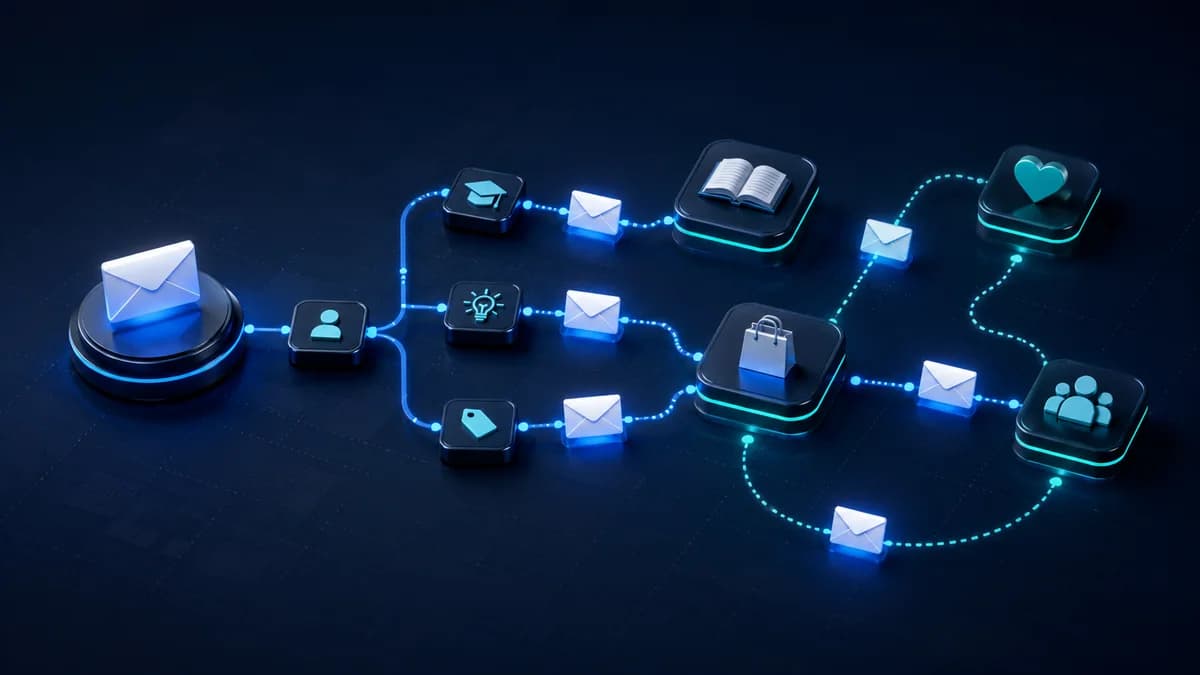
Email automation sends messages based on a customer event or state, such as signing up, viewing a product, buying or approaching an expiry date. The goal is to deliver the right information at the right time, not to send more email.
A good system separates mandatory transactional email from marketing email, stores the recipient's consent and always offers a clear way to manage contact preferences.
5 workflows to build first
- Welcome: confirm the sign-up, introduce the value and guide the first step.
- Nurture: send content matched to the problem the user cares about.
- Abandoned checkout: remind them of the right product, answer the blocker and stop once they buy.
- Post-purchase onboarding: confirm, explain how to use it and offer help proactively.
- Retention: renewal reminders, useful updates, satisfaction surveys or related product suggestions.
Prepare the data and the segments
Start with minimal data: the sign-up source, topics of interest, customer status and transaction history. Segmentation only helps when it leads to a genuinely different message. Do not collect fields you have no use for, or keep them longer than necessary.
How to build a sequence
- 01
Choose the trigger event
For example joining a list, buying a product or being inactive for a period of time.
- 02
Set the goal
Each workflow needs one main outcome, such as completing setup, returning to the website or renewing.
- 03
Write the content
Each email answers one question, has a clear subject line and one next action.
- 04
Set the exit conditions
Stop or branch once the recipient has completed the goal, so you avoid messages that no longer fit.
- 05
Test
Check links, personalisation variables, time zones, mobile rendering and test recipient addresses.
Measure beyond the open rate
- Click rate and the actions completed after the email.
- Revenue or activation rate per workflow.
- Bounce rate, spam complaints and unsubscribes.
- Time from sign-up to first value.
- Engagement by segment and by sending frequency.
Principles of responsible email
- Only send marketing content where you have a proper legal basis and consent.
- Show the sender identity and an unsubscribe mechanism that is easy to use.
- Protect the email list, restrict access and never buy a list.
- Set up SPF, DKIM and DMARC, and monitor deliverability.
- Cap the frequency so workflows do not overlap and annoy people.